

$

SIBE

$

Über uns

$

Mission/Leitbild

$

Geschichte

$

Team

$

Forschungsschwerpunkte

$

Publikationen

$

Presse

$

Stellen bei der SIBE

$

Standorte

$

Rechtliches

$

Impressum

$

Datenschutzerklärung

$

Business Performance

$

Business Projects

$

Innovation Projects

$

Scientififc Projects

$

Projektbeispiele

$

Personal

$

Rekrutierung

$

Mitarbeiterbindung

$

Employer Branding

$

Persönlichkeitsentwicklung

$

Partner

$

School

$

Programme

$

M.Sc. International Management – SIBE-Management-Master

$

German-US-Dual-Degree (M.Sc./MBA)

$

M.Sc. in Digital Leadership

$

General Management Master (M.A.)

$

MBA Professional

$

MBA and AI & Quantum Diploma

$

LL.M. in International Business Law

$

Doctor of Business Administration (DBA)

$

Erfahrungsberichte

$

Lehre

$

Mitglieder

$

Systemakkreditierung

$

Qualität

$

Partnerhochschulen

$

Studierende & Alumni

$

Mentoring

$

Für Gründer

$

Benefits & Netzwerke

$

Empfehlungsprämien

$

E-Campus

$

Stellenangebote

$

Projektbeispiele

$

Downloads

$

FAQ

Erfahrungsbericht

„The SIBE Master strengthened my operational, strategic and leadership competencies“

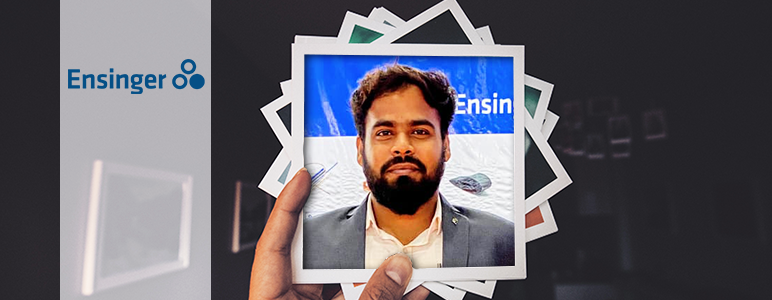
In Conversation with SIBE Alumnus Mohammad Asmathdeen – Partnercompany during the program: Ensinger GmbH, Studienprogramm: German-US-Dual-Degree

With a background in Polymer Engineering, Mohammad Asmathdeen decided to pursue a job-integrated master’s program at SIBE to further develop his understanding of management, international business practices and entrepreneurial responsibility. A key factor in his decision was the opportunity to connect academic learning directly with real business projects in his company.

During his master’s program, he worked at Ensinger and contributed to innovation and business development projects within the plastics division. His work focused on topics such as market analysis, product launches and process improvement. After completing his studies in 2025, he remained with Ensinger Plastics India, where he now works as Business Manager in the Medical Business area.

First academic degree: Polymer Engineering
Course: German-US-Dual-Degree
Graduation year: 2025

Which company are you currently working for after completing your SIBE studies in 2025?

After completing my SIBE studies in 2025, I remained with the same partner company and continued my career at Ensinger Plastics in India. Today, I work as Business Manager for Medical Business, where I am responsible for managing operations and business development in the South zone region.

Ensinger India Engineering Plastics Pvt. Ltd. is a 100% owned subsidiary of Ensinger GmbH, specializing in high-performance and medical-grade plastics for sectors such as healthcare, aerospace and industry. Together with my team, I support regional and national customers, focusing on advanced thermoplastics, regulatory compliance and application development for medical devices and equipment.

What are your responsibilities, and what is your most important project at the moment?

As the Business Manager, I am responsible for developing and expanding Ensinger’s medical-grade engineering plastics business in India. This includes managing commercial operations, sales strategy and customer relationships with clients in the medical industry.

In my role, I lead product presentations, technical discussions and specification support with hospitals and device manufacturers. I also coordinate order fulfillment, logistics and post-sales service, while working closely with our manufacturing, quality and technical teams to ensure smooth project execution and effective troubleshooting.​

My most important current project focuses on strengthening Ensinger’s presence in medical device applications, especially for advanced polymer stock shapes used in surgical instruments, diagnostic platforms and orthopedic implants. The project includes driving collaborations with regional OEMs and expanding supply to hospital networks, while ensuring compliance with regulatory requirements and performance standards.

What did you study in your undergraduate program?

I completed my undergraduate studies in Polymer Engineering in India. The program focused on the design, processing and development of polymers such as plastics and rubber. It provided me with a strong foundation for a career in materials engineering and related application fields.

Why did you decide to pursue a master's degree at SIBE after completing your undergraduate studies?

After completing my undergraduate studies in Polymer Engineering, pursuing a master’s degree at SIBE was a strategic decision to close the gap between technical background and business leadership. The opportunity to work with the Ensinger Group gave me valuable exposure to an international business environment and showed me how important advanced management competencies are for driving innovation in the medical plastics sector.​

The SIBE program was recommended by my organization because of its strong focus on strategic thinking, decision-making and systematic problem-solving. These competencies are vital in high-tech, customer-driven industries like medical devices and engineering plastics. Having previously worked in techno-commercial roles, I wanted to develop a broader understanding of management frameworks and global business practices in order to contribute more effectively to cross-functional teams, product launches and complex projects.​

What did you do during the two years in the job-integrated SIBE master's program at your company, the Ensinger GmbH? How did you benefit from this experience?

During the two years in the job-integrated SIBE master’s program at Ensinger, I was able to combine advanced academic learning with hands-on business practice. My studies were directly linked to ongoing company projects, which allowed me to apply theoretical concepts to real business challenges.

I worked on innovation and business development projects within Ensinger’s plastics division, focusing on topics such as market analysis, product launches and process improvement. By combining classroom learning with immediate application in a real business environment, I developed stronger problem-solving competencies, a more strategic mindset and a deeper understanding of innovation, change management and long-term business planning. This approach also strengthened my competencies in project leadership and stakeholder management, as well as my systematic and analytical thinking.

Overall, the SIBE Master strengthened my operational, strategic and leadership competencies and prepared me to take on greater responsibility in my professional role.

How do you continue to benefit from your Experience-Based Curriculum? And who would you particularly recommend this type of program to?

I continue to benefit from SIBE’s Experience-Based Curriculum in my daily work because it helped me approach business challenges in a more structured and practical way. The program’s combination of real company projects and academic input strengthened my ability to analyze complex situations, make well-founded decisions and deliver innovation-driven results for Ensinger’s medical plastics business.

Additionally, the close mentorship and regular feedback sessions from both Ensinger’s management and SIBE’s faculty helped me build a habit of continuous reflection, critical thinking and data-driven decision-making. These competencies are valuable for navigating dynamic markets and stakeholder expectations, especially when launching new products, expanding into new territories or managing challenging situations.​

I would particularly recommend this type of program to early- and mid-career professionals who want to grow from technical roles into management positions in global companies. The curriculum is also ideal for those who thrive in hands-on, project-based learning environments and seek to directly connect academic theory with professional practice.

How important was and is your professional network to you? Do you still have contact with the university or individual classmates?

My professional network has always been important, also after completing the SIBE program. I remain connected with several classmates and a few professors from the university. These relationships within the SIBE community allow me to exchange knowledge, gain different perspectives and receive long-term support for my professional development.

What do you remember most fondly when you think back to your time at SIBE?

What I remember most fondly about my time at SIBE is the collaborative environment. The insightful discussions with classmates and the mentorship I received created a strong sense of community and supported my personal growth. These experiences enriched my knowledge and built my confidence to lead strategic initiatives in the medical plastics industry. The program truly shaped my holistic approach to problem-solving and innovation.

Is there anything you would like to share with current SIBE students?

To current SIBE students, I would say: Make the most of every opportunity to apply what you learn directly in your workplace. The systematic integration of theory and real business projects is what makes the program truly valuable.

I would also encourage them to build strong networks with your peers, professors and business mentors, as these connections can support your growth and career long after graduation.

Finally, stay open to challenges, remain curious, keep learning continuously and use this experience to create a purposeful career.